
American Basketball Association (1969-1974)
Tombstone
Born: January 18, 1969(Sale of Houston Mavericks to North Carolina group announced)1New Owners See Chance for Mavs, AP via The Victoria Advocate, Jan. 19, 1969
Relocation Officially Announced: March 31, 19692North Carolina Move By Mavericks Imminent, Times Wire Services via The St. Petersburg Times, Mar. 29, 1969
Died: July 17, 1974 (Spirits of St. Louis – Sale and relocation announced)3ABA Carolina Cougars Move to St. Louis, AP via The Pittsburgh Post-Gazette, Jul. 18, 1974
First Game: October 18, 1969 (W 108-93 vs. Dallas Chaparrals @ Greensboro, NC)
Last Game: April, 8, 1974 (L 128-119 vs. Kentucky Colonels @ Lexington, KY, Game 4 Eastern Division Semifinals)
ABA Championships: 0
Arenas
Greensboro Coliseum, Greensboro, NC (1969-1974)
Opened: October 12, 19594Greensboro Coliseum Complex website
Charlotte Coliseum, Charlotte, NC (1969-1974)
Opened: September 11, 19555Linwood Sends Goodly Number To Colleges, The Dispatch, Lexington, NC, Sep. 15, 1955
Dorton Arena, Raleigh, NC (1969-1971)
Opened: October 14, 1952 (as State Fair Arena)6Big State Fair Opening Oct. 14, The Richmond County Journal, Oct. 8, 1952
Reynolds Coliseum, Raleigh, NC (1970-1974)
Opened: December 2, 19497Utah Hoop Teams Take Upset Wins, AP via The Spokane Daily Chronicle, Dec. 3, 1949
Winston-Salem Memorial Coliseum, Winston-Salem, NC (1971-1972)
Opened: September 19, 19558“Ice Capades” To Feature Outstanding Performers, The Dispatch, Lexington, N.C., Sep. 15, 1955
Demolished: 1989
Lee Fieldhouse, Ft. Bragg, Fayetteville, NC (1971-1972)
Opened: May 14, 19519The Military Standard, Army Bases, Fort Bragg North Carolina
Marketing
Team Colors:
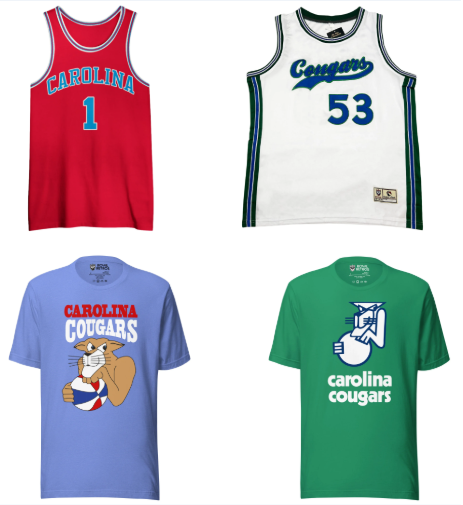
1969-1971: Carolina Blue, Cardinal Red, White
1971-1974: Green, Blue, White
Ownership
Jim Gardner, Southern Sports Corp. et al (1969-1970)10New Mystery: Who Purchased The Mavericks, AP via The Press Courier, Jan. 5, 1969
Tedd Munchak(1970-1974)11Munchak buys part interest in pro team, The Rome News-Tribune, Oct. 19, 1970
Background
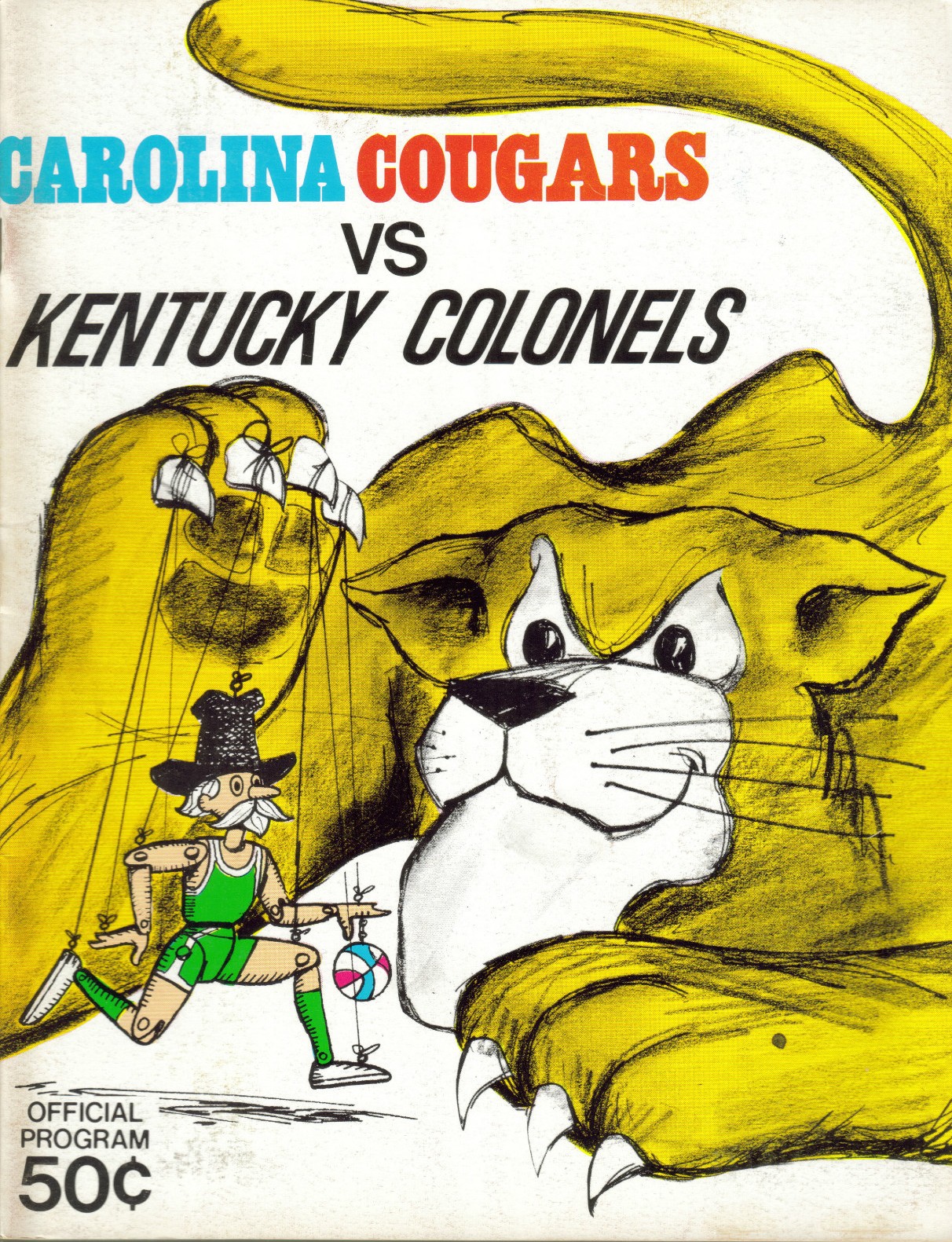
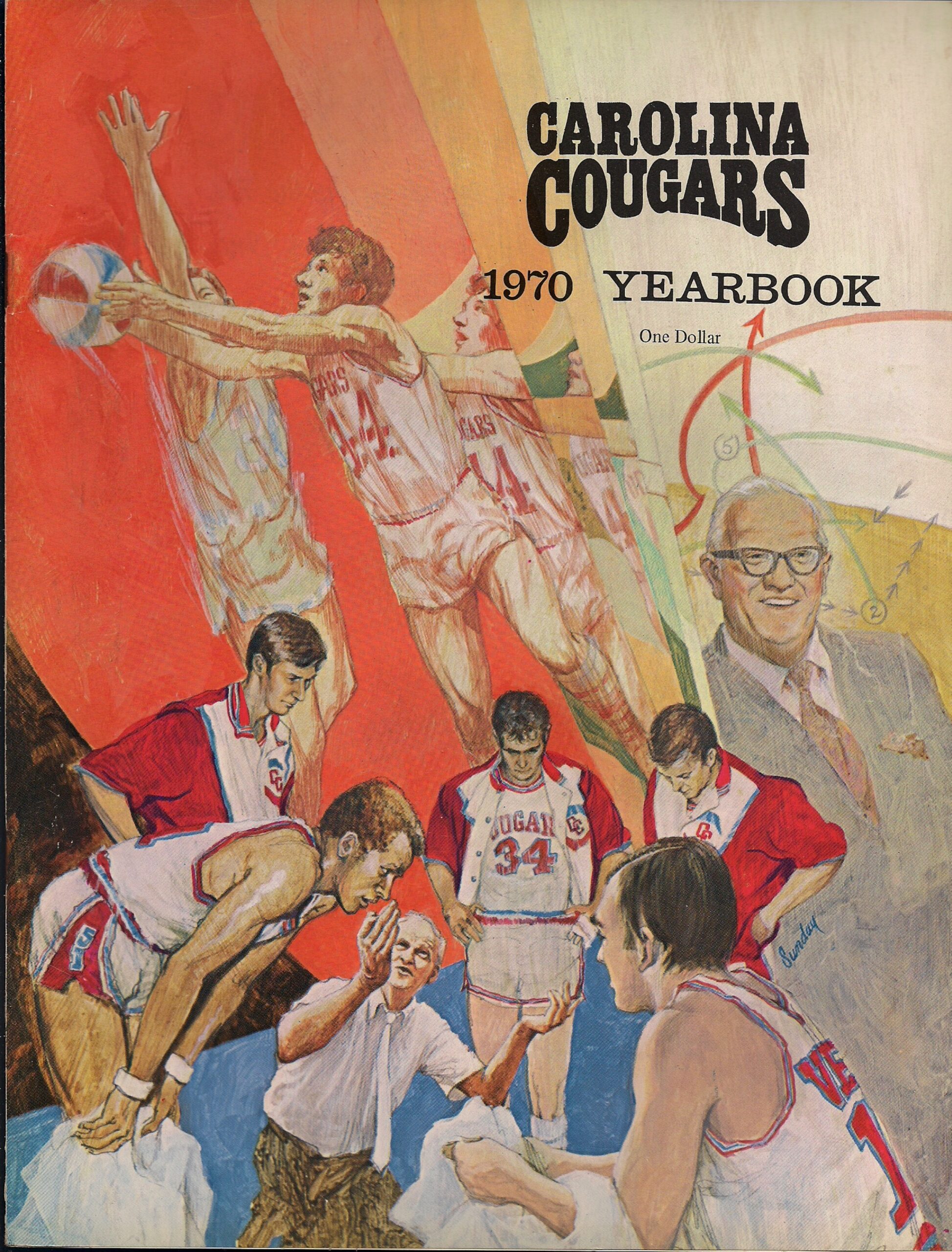
The Carolina Cougars were members of the American Basketball Association (ABA) from 1969 to 1974. The team was created shortly after the Houston Mavericks franchise, a charter member of the league in 1967, was sold to a group from North Carolina headed by Jim Gardner, a former member of Congress.
Houston, we have a problem
Gardner and his partners took control of the Mavericks in January of 1969. The team was in last place in the ABA’s Western Division with a record of 13-27. With 16 home games left, Gardner promised to give Houston fans an exciting basketball team and hinted the team might stay in Texas. However, the team was drawing poorly at Sam Houston Coliseum on its way to finishing 18 games out of the final playoff spot.
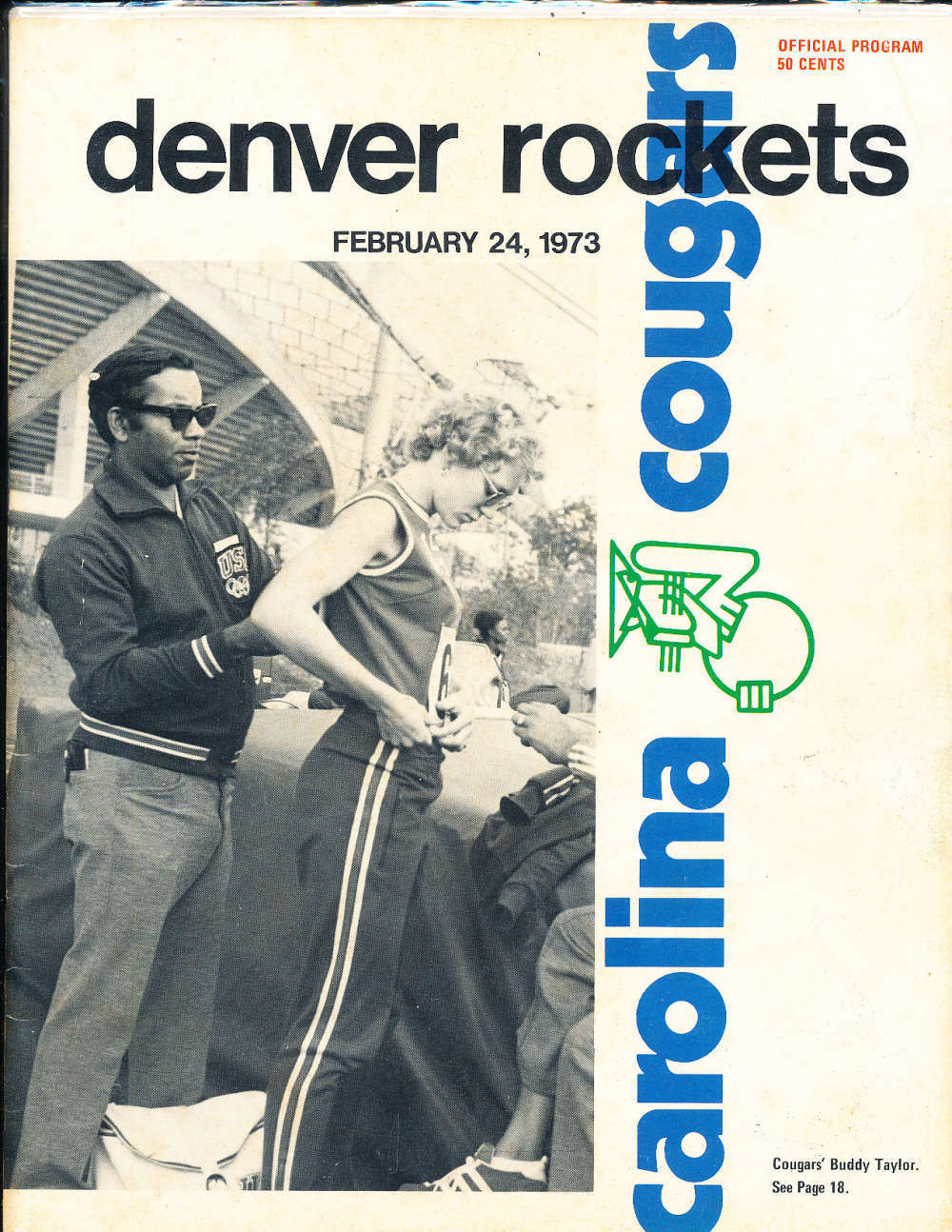 At the end of March, the official announcement was made: the Mavericks were moving to North Carolina, where they would be called the Carolina Cougars. As such, they became the first major league team in any sport to represent more than one state. They would be joined a year later by the NFL’s New England, formerly Boston, Patriots.
Unlike the Patriots, however, the Cougars played home games in three different cities: Charlotte, Raleigh, and Greensboro. Most were hosted in Greensboro, even though Charlotte was, and still is, the state’s largest city.
Cougars debut in North Carolina
The Cougars debuted on October 18, 1969, with a 108-93 win over the Dallas Chaparrals in Greensboro. Under coach Bones McKinney, the team finished 42-42 in the Eastern Division, good for third place and a spot in the playoffs. In the first round, the Cougars were swept in four games by the Indiana Pacers, the eventual champions. Still, fan support was strong in all three cities. The team drew an average of over 6,000 fans to 42 home games, with 14 of those being played in Charlotte, and eight played in Raleigh.
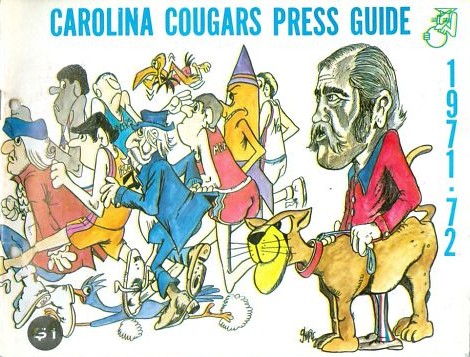 After owning the team for only one full season, Gardner and his partners sold the franchise to Georgia businessman Tedd Munchak, just two games into the 1970-71 season. The Cougars dropped to 34-50 that year and missed the playoffs. Fan support dipped only slightly, though, as they averaged 5,500 per game. That year, they played 12 games in Charlotte, 12 in Raleigh, and 18 in Greensboro.
Support dipped further the following year, as the team’s record improved by just one game at 35-49, good for fifth place but again out of the playoffs. In addition to the 21 home games played in Greensboro, the Cougars played 14 in Charlotte, six in Raleigh, three in Winston-Salem, and one in the Lee Fieldhouse at Fort Bragg.
Winning ways
Things turned around starting in 1972. A month after the 1971-72 season ended, Munchak hired retired ABA legends Larry Brown and Doug Moe, the latter a former Cougar, to coach the team.12Cougars Hire Larry Brown As Coach, AP via The Lewiston Morning Tribune, Apr. 22, 1972 The new coaching staff led a team that included all-stars Billy Cunningham, Joe Caldwell, and Mack Calvin. The Cougars finished the 1972-73 season atop the Eastern Division with a league-best 57-27 record. They downed the New York Nets 4-1 in the division semifinals but fell to the Kentucky Colonels in seven games in the Eastern Division finals. However, the postseason run capped off a season that saw a corresponding uptick in attendance. However, it wasn’t enough to save the team. In May, reports began to circulate that Munchak was looking to sell the team.13Cougar Owner Set To Sell ABA Team, AP via The Victoria Advocate, May 4, 1974 With no takers, he closed the team’s offices in Greensboro, Charlotte, and Raleigh in early July.14ABA slates confab again, Combined wire services via The Desert News, Jul. 9, 1974
Struggles as a regional franchise
Though they were coming off a successful postseason run and attendance was up, Munchak had lost what he termed “plenty” of money. When asked by the Associated Press whether the team’s functioning as a regional franchise between cities had hurt the franchise, he replied, “That’s part of it.”15Cougar Owner Set To Sell ABA Team, AP via The Victoria Advocate, May 4, 1974 As The Floridians found out two years earlier, and the Virginia Squires would soon realize, playing in multiple cities was not the formula for success in professional sports. A few weeks later, a group from New York, led by brothers Daniel Silna and Ozzie Silna, purchased the franchise from Munchak and moved it to Missouri where it became The Spirits of St. Louis.
 Munchak wasn’t done with the ABA, though. A week after selling the team, he became ABA commissioner, a position that he would hold for just one season. On January 27, 1975, he announced that Cincinnati would be in the ABA for the 1975-76 season,16Cincinnati awarded ABA franchise, AP via The Free Lance-Star, Jan. 28, 1975playing in the brand new Riverfront Coliseum, home of the WHA’s Cincinnati Stingers. He would own the franchise, which would be called the Cincinnati Cougars.17ABA ‘Cougars’ Coming to Cincinnati, The Cincinnati Enquirer, Jan. 28, 1975 In May, though, he announced that he was pulling the plug on the idea and wanted to resign as commissioner.18No Franchise In Cincinnati Seen, AP via The Portsmouth Times, May 15, 1975
Pro basketball would return to North Carolina on April 22, 1987, when Charlotte businessman George Shin was awarded an NBA expansion franchise for North Carolina’s largest city.19Charlotte NBA chief sees record attendance, AP via The Star-News, Apr. 25, 1987 At first, the team was going to be known as the Charlotte Spirits, but fans and the media weren’t keen.20Fans want a new name, AP via The Evening News, Apr. 26, 1987 Shinn held a name-the-team contest, and the winning entry was the Charlotte Hornets, somewhat oddly, the same name used by the city’s World Football League team in 1974 and 1975. The name Cougars finished third in the balloting behind Knights.21Charlotte loses Spirit, but gets the Hornets, AP via The Free-Lance Star, Jun. 6, 1987

Links
###