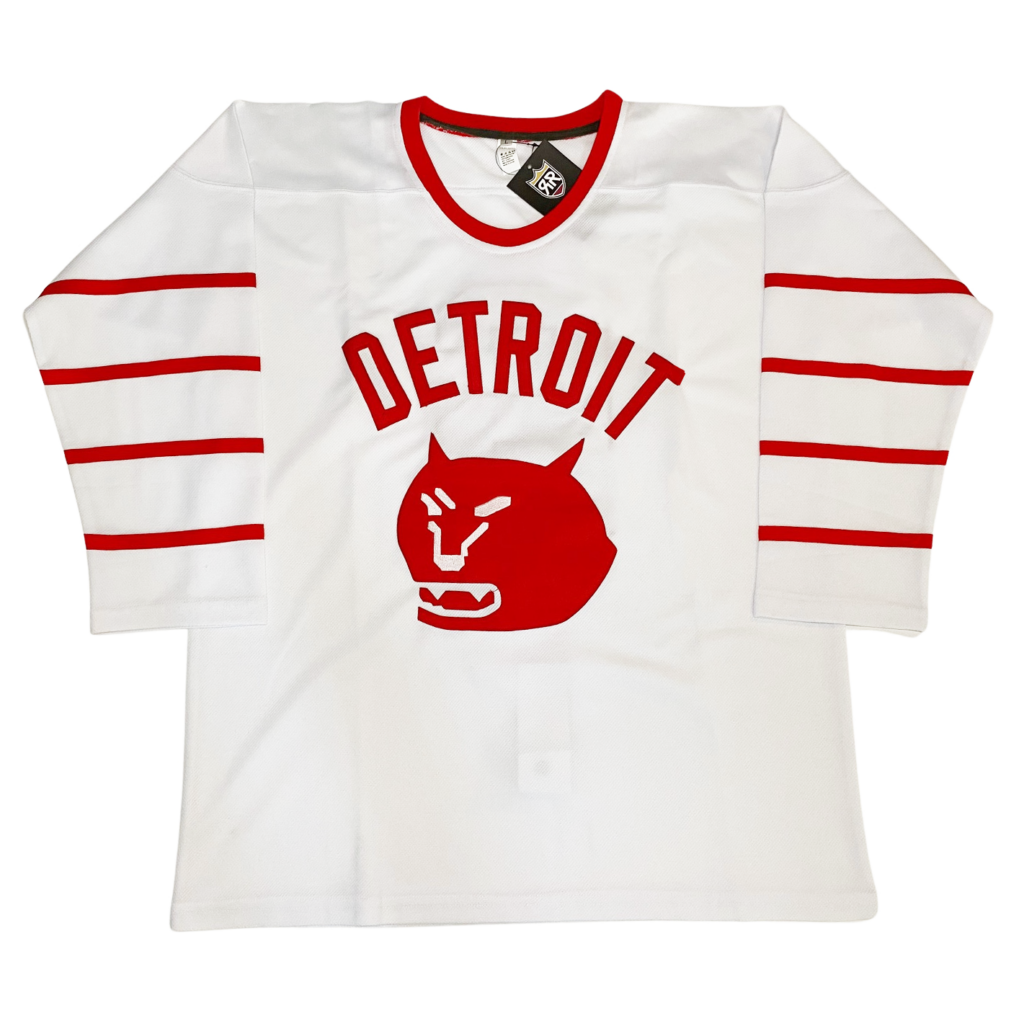
Born: September 25, 19261Chicago and Detroit Get Berths in National Hockey League, AP via The Evening Tribune, Sep. 26, 1926 Renamed: October 30, 1930 (Detroit Falcons)2Cougars Have New Name And Players, AP via The Lewiston Evening Journal, Oct. 30, 1930 Renamed: October 5, 1932 (Detroit Red Wings)3Falcons Change Name, The Border Cities Star,Oct. 6, 1932
First Game: November18, 1926 (L Detroit Cougars 0 vs. Boston Bruins 2) Last Game: March 29, 1932 (L Detroit Falcons 0 @ Montreal Maroons 2)
Stanley Cup Championships: None
Arenas
Border Cities Arena (Windsor, ON) (1926-1927) Opened: January 8, 19244New Arena Jammed To Capacity, The Border Cities Star, Jan.9,1924 Closed: 20135Windsor Arena Renovation Project Pitched by Windsor Express, Arena Digest, Dec. 12, 2019[/mfn
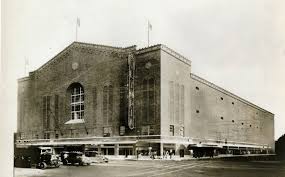
Detroit Olympia (1927-1932) Opened: October 15, 19275Detroit Olympia Opens Doors Today, The Border Cities Star, Oct. 15, 1927 Closed: February 21, 19806Olympia’s farewell will reunite friends, The Windsor Star,Feb. 20, 1980 Demolished: July 10, 19867Olympia’s Walls Come Tumbling Down, The Detroit Free Press via Newspapers.com, Jul. 10, 1986
Marketing
Team Colors: Red and White (as the Cougars)8TruColor.net Red, White, and Gold (as the Falcons)9TruColor.net
Ownership
Owners:
John Townsend, Charles Hughes, and Wesley Seybourn (1926-1931)
The Union Guardian Trust Company (1931-1932)
Background
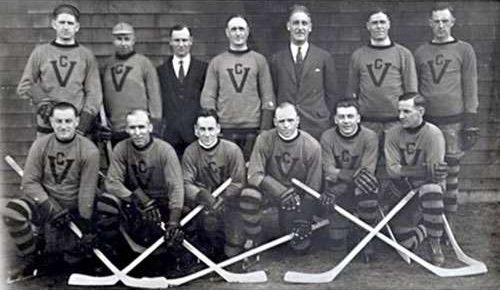
The Detroit Cougars were the Motor City’s first top-level, professional hockey franchise. The team was established in 1911 as the Victoria (B.C.) Senators of the Pacific Coast Hockey Association (PCHA). They were later known as the Victoria Aristocrats and spent one season in Washington State as the Spokane Canaries. Upon their return to B.C., they resumed their identity as theVictoria Aristocrats. In 1922, they rebranded as the Victoria Cougars.
The WCHL, however, suffered a fate similar to that of the PCHA. Having lost players to the wealthier teams on the East Coast in the NHL, the league went out of business in 1926. Its players, and in two cases, whole teams, were gobbled up by the NHL. One of those teams was the Cougars, which was purchased on May 3, 1926 by a syndicate from Detroit led by Morris Caplan and Morris Friedberg.10Victoria Cougars Sold for $100000, UP via The Spokane Daily Chronicle, May 3, 1926 However, that deal fell through when a Detroit franchise was tentatively awarded to a group that included John Townsend, Charles Hughes, and Wesley Seybourn. That trio purchased the Cougars from Lester Patrick and his brother Frank for $100,000. The team’s owners, though, had to wait until late September of that year to be officially awarded a spot in the NHL.11Chicago and Detroit Get Berths in National Hockey League, AP via The Evening Tribune, Sep. 26, 1926 Hughes was named president of the new team, though the deal to purchase the club wasn’t finalized until October 5, 1926. Once the transaction was completed, Caplan and Friedberg received a finder’s fee of $25,000.12Detroit Now Owns Victoria Cougars, The Calgary Daily Herald, Oct. 5, 1926
The franchise was awarded to the Townsend group contingent upon the completion of a new arena. Unfortunately, the arena was not ready for the start of the 1926-27 season, forcing the club to host games across the border in Windsor’s Border Cities Arena.
Rough start
While the Victoria Cougars had captured what would be the last WCHL title and made it to the Stanley Cup finals for a second straight time, the Detroit Cougars posted a league-worst record of 12-28-4 in their inaugural NHL campaign. To make matters worse, the team drew poorly, finishing second from the bottom with an average of just 2,100 fans coming through the gate.
Detroit Olympia. The first permanent home of the Cougars/Falcons/Red Wings
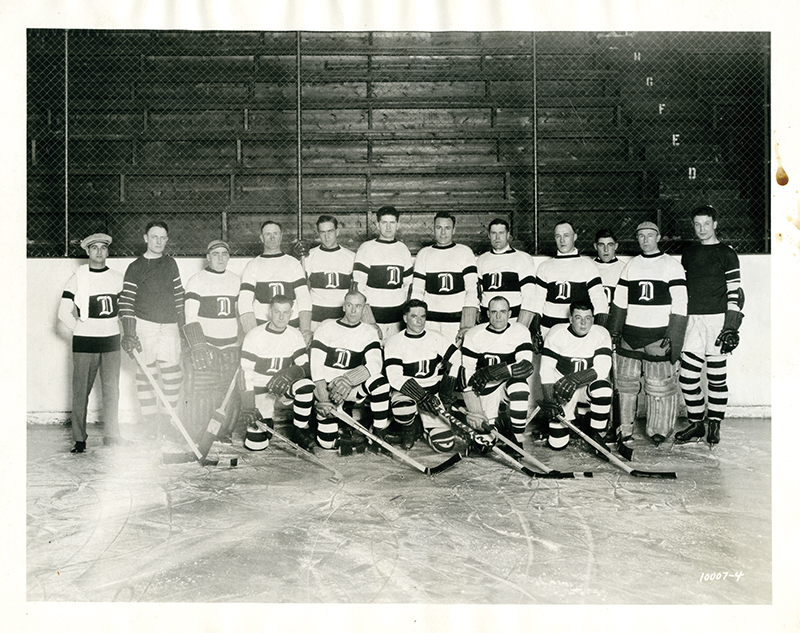
The following season saw a slight improvement on the ice as the team had seven more wins and missed the final playoff spot in the American Division by just two points. Attendance went way up, though, as the team moved into The Olympia, a brand new arena that would be the franchise’s home until 1979. The team drew almost 6,500 fans a game in their new home, more than tripling the previous year’s mark. Even more notable, they did so while competing with another local team for fans.
In 1927, the Detroit Olympics, also owned Cougars president Charles Hughes, were established in the minor league CPHL (Canadian Professional Hockey League), and they also used the Olympia for their home games.
Moving in the right direction?
Meanwhile, the Cougars finally broke through in their third season in Detroit, as they went 19-16-9 and captured the third and final playoff spot in the American Division. They lost to the Toronto Maple Leafs 2 games to none. They tumbled to a record of 14-24-6 the following season and did not make the playoffs.
Just before the start of the 1930-31 season, the team changed its nickname to Falcons. According to a 1995 Detroit News article, the switch was the result of a promotion with a local newspaper.13Those magnificent men in red, The Detroit News Archive, Sep. 30, 1995 However, a newspaper story from October 30, 1930, claims the change was made “because fans found it difficult to pronounce correctly the old title (Cougars).”14Cougars Have New Name And Players, AP via The Lewiston Evening Journal, Oct. 30, 1930
Or maybe not
Whatever the case, the name change didn’t help. The team missed the playoffs. During the offseason, Olympia Properties, which included the Falcons and Olympics hockey teams, as well as the arena, fell into receivership. The Union Guardian Trust Company assumed control of all assets and ran the clubs and the building through the 1931-32 season.
On the ice, the Falcons bounced back and squeaked into the 1932 postseason, where they succumbed to the Montreal Maroons in the first round. As the Great Depression continued to plague the world’s economy, potential buyers for the club were scarce.
New ownership
In August 1932, Thomas Shaughnessy, vice president of the American Hockey Association (AHA) and president of that circuit’s Chicago Shamrocks, announced that he and Shamrocks owner James Norris had purchased the Falcons. They planned to shift the team to the AHA.15Claims Detroit To Quit Majors, AP via The Leader-Post, Aug. 24, 1932 The NHL, however, stated that since the team was still in receivership, the Falcons weren’t going anywhere. The Union Guardian Trust Company also denied that it had sold the team to Shaughnessy and Norris.16Owners Deny Rumor That Detroit Club Sold To Shaughnessy, The Saskatoon Star-Phoenix, Aug. 12, 1932
A few weeks later, though, the pair did acquire the Falcons, with the intention of keeping them in the NHL.17Hockey War Ends As American League Reinstated, The Border Cities Star, Sep. 3, 1932 A month later, the franchise’s nickname was changed to Red Wings, which it has been called ever since.

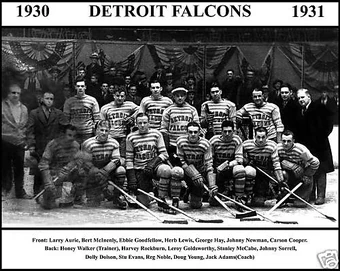 Whatever the case, the name change didn’t help. The team missed the playoffs. During the offseason, Olympia Properties, which included the Falcons and Olympics hockey teams, as well as the arena, fell into receivership. The Union Guardian Trust Company assumed control of all assets and ran the clubs and the building through the 1931-32 season.