
World Hockey Association (1972-1975)
Tombstone
Born: October 29, 1971 – WHA founding franchise. 1Cougars prepare for WHA debut, AP via The Windsor Star, Oct. 30, 1971
Folded: May 27, 19752WHA expels Chicago, via CP The Windsor Star, May 28, 1975
First Game: October 12, 1972 (L 3-2 @ Houston Aeros)
Last Game: April 6, 1975 (L 6-3 @ Edmonton Oilers)
WHA AVCO Cup Championships: None
Arena
International Amphitheatre, 1972-1975 (9,000)
Opened: December 1, 19343Chicago Stock Show Being Held Here, via The Daily News, Ludington, MI, Dec. 1, 1934
Demolished: August 3, 19994Amphitheatre Torn Down, The Telegraph Herald, Aug. 4, 1999
Randhurst Twin Ice Arena, Mt. Prospect, IL (1974, playoffs)
Opened: 1974
Closed: Mid-1980s
Marketing
Team Colors: Forest Green, Gold, White
Ownership
Owners:
- 1971-1972: A. John Syke5New Team, New Arena For Chicago, AP via The Toledo Blade, Oct. 30, 1971
- 1972: John J. Lander, A. John Syke et al.6Chicago prepares for bow, UPI via The Windsor Star, Mar. 30, 1972
- 1972-1974: Walter and Jordon Kaiser7Signings galore by WHA teams, S-P Wire Services via The Phoenix, Jun. 30, 1972
- 1974-1975: Ralph Backstrom, Dave Dryden, Pat Stapleton8Cougars are sold, UPI via The Bryan Times, Dec. 28, 1974
Background
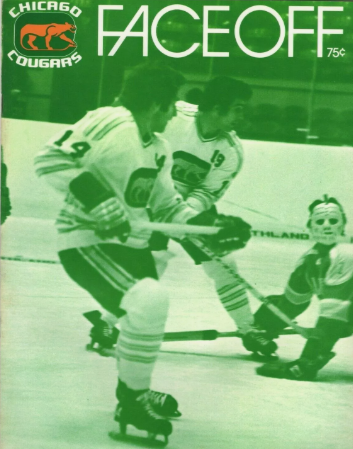
The Chicago Cougars were charter members of the World Hockey Association (WHA) and were officially introduced to the public on Friday, October 29, 1971, three days before the league’s official launch. The formation of the WHA had been announced by league founder Gary Davidson back in September of that year. He, along with co-founder Dennis Murphy, had formed the American Basketball Association (ABA) a few years earlier. Now they set their sights on ice hockey, a sport they knew next to nothing about.
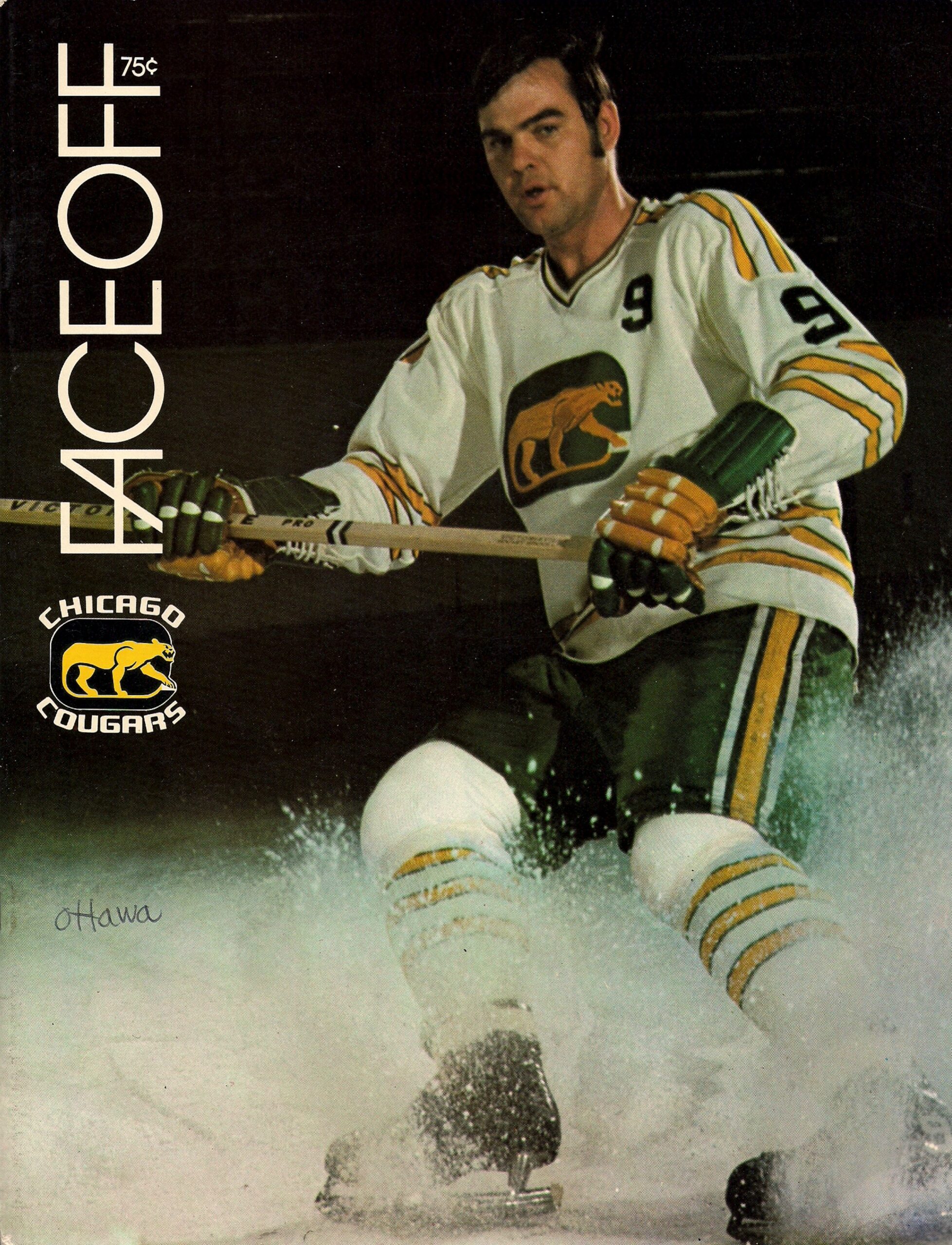 That didn’t stop them, and many others, from skating ahead with the formation of a circuit to compete against the established National Hockey League (NHL). That included A. John Sykes, who was awarded the Chicago franchise in the WHA. He had big plans for his team, including the construction of a brand-new arena that would be the club’s home and the signing of one of the game’s best players. In December of 1971, reports circulated that the Cougars were prepared to offer Bobby “The Golden Jet” Hull, of the NHL’s Chicago Blackhawks, a previously unheard-of salary of $2 million over five years.9Super Bobby on Move? The Phoenix, Dec. 4, 1971
The Chicago shuffle
In March of 1972, six months before the start of the league’s inaugural season, Sykes sold his majority interest in the team to John J. Lander.10Baseball GM for WHA Team, AP via The Sun, Mar. 29, 1972 The former owner retained a 10% stake in the team. Hull, meanwhile, signed a contract worth $2.5 million with the WHA’s Winnipeg Jets in June 1972,11Bobby Hull signs with Winnipeg Jets for $2.5 million: Will NHL sue? AP via The Rochester Sentinel, Jun. 28, 1972 which proved the new league was serious about spending however much it took to put talented players on the ice. Lander, however, may have gotten a little spooked, as a day later, he sold the Cougars to brothers Walter and Jordon Kaiser.12New Owners of Cougars Hire Coach, AP via The Spokesman Review, Jun. 30, 1972
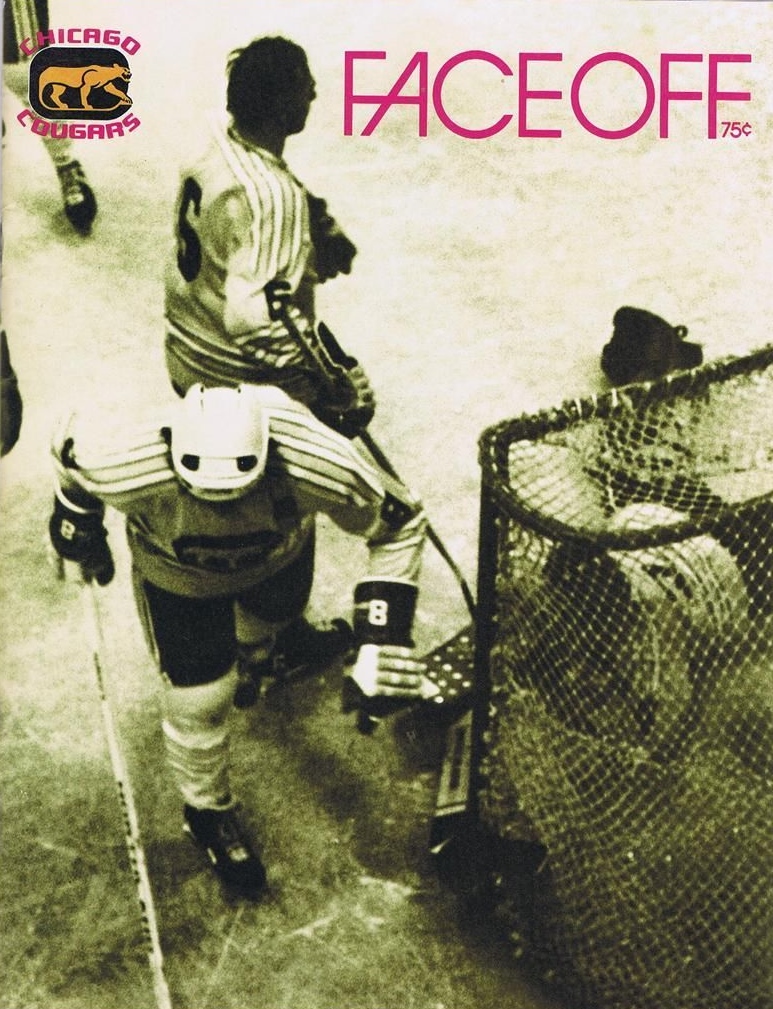 The Kaisers, too, were keen to get an arena sorted for their newly acquired pro hockey franchise, but for their first season, at least, they would have to play their home games at the International Amphitheatre. As the facility did not possess ice-making capabilities, it would be up to the Cougars to provide the equipment necessary to create a rink.
Hitting the ice
The Cougars started their inaugural season with seven road games before making their home debut on Halloween Night 1972 against Bobby Hull and the Winnipeg Jets. Unfortunately, Hull didn’t suit up as the courts hadn’t decided whether or not the Golden Jet could play in the new league. A crowd of 6,727 fans turned out to see the Cougars notch their second win of the season, 3-1. Hull got a standing ovation and then spent most of the evening signing autographs.13Hull honored by WHA without playing, UPI via The Bulletin, Nov. 1, 1972

The Golden Jet and the Jets returned on December 22, and this time he did play. Chicago beat Winnipeg 3-2 in front of 8,856 fans.14Cougars edge Jets on Barber’s goal, UPI via The Montreal Gazette, The Cougars, though, finished with the worst record in the league at 30-47-1. Halfway through the season, in February, the team’s previous owners claimed they were, in fact, the rightful owners of the franchise.14Franchise suits filed, AP via The Phoenix, Feb. 14, 1973 The Kaiser brothers stated that they were awarded a “clean” franchise directly from the league, and the matter was quickly settled.
A new home?
In July 1973, plans were announced for a new arena in the Northwest Chicago suburb of Rosemont to be called O’Hare Arena.15Sports complex plans unveiled, AP via The Leader-Post, Jul. 13, 1973 The name was inspired by the building’s location at the end of one of the runways at Chicago O’Hare International Airport. Unfortunately, the Cougars would never see the new rink. Litigation delayed the project for several years. Ground wouldn’t be broken until. The arena, subsequently renamed the Rosemont Horizon, opened on May 14, 1980,16Stadium Opens, AP via The Spokesman-Review, May 16, 1980 with a concert by Fleetwood Mac, long after the Cougars’ demise. The building’s first tenant was the Chicago Horizons of the Major Indoor Soccer League (MISL). Today, it’s known as the Allstate Arena and has been home to the American Hockey League Chicago Wolves since 1994.
Meanwhile, back in the ‘70s, while dreams of a new arena danced in their heads, the Cougars began the 1973-74 season with a nine-game road trip that started with a game against the Toronto Toros on October 7, 1973. Halfway through that run, they acquired former Blackhawk Pat Stapleton17Cougars acquire Hawkish outlook, The Edmonton Journal, Oct. 18, 1973 before coming home to Chicago on October 30 with a 4-4-1 record. They finished the year with a mark of 38-35-5, good for 4th in the league’s Eastern Division and a playoff berth. And that’s when things got a little weird.
The Peter Pan problem
The Cougars faced the New England Whalers in the first round of the playoffs and went on to defeat the defending champions in seven games. That set up a semi-finals series against the Toronto Toros. The home team was quickly informed that a production of Peter Pan, starring Cathy Rigby, was scheduled for an extended run at the International Amphitheatre, the Cougars’ home.18Cougars’ story continues, CP via The Calgary Herald, Apr. 18, 1974 For the show, all of the ice-making equipment was removed from the arena. The Kaisers scrambled to find an alternate venue to host the team’s home games. They contacted every arena in Chicagoland and beyond, including Chicago Stadium, home of the NHL Blackhawks, and the Notre Dame Convocation Center in South Bend, Indiana.19Chicago Cougars Worry Because Of Peter Pan, AP via The Robesonian, Apr. 18, 1974 Not wanting to stray too far from their fans, they settled on Randhurst Twin Ice Arena in suburban Mt. Prospect. The league bristled but ultimately let the team make the final decision on using the 3,000-seat facility20Chicago Cougars Worry Because Of Peter Pan, AP via The Robesonian, Apr. 18, 1974 that sat on an outlot of the Randhurst Mall.
The Cougars eliminated the Toros in seven games. They went on to face Gordy Howe and the Houston Aeros in the finals. That’s when Peter Pan flew in again to wreak havoc. The first two games were scheduled for Sam Houston Coliseum in Houston, but coincidentally, Peter Pan was scheduled in that arena for those game dates.21Cougars are forced to play in suburbs, CP via The Leader-Post, May 10, 1974
Though the production had vacated the International Amphitheatre, the Cougars weren’t confident that the ice-making equipment could be reinstalled in time, so the team decided to host its finals games at Randhurst. The Aeros swept the Cougars in four games.
Fading away
Thirty games into the team’s third season, the franchise was sold to player/coach Pat Stapleton, joined by teammates Ralph Backstrom and Dave Dryden.22Chicago Cougars sold to Stapleton group, CP via The Montreal Gazette, Dec. 28, 1974 Attorney Jeff Rosen was also part of the new ownership group. The team finished that campaign with a record of 30-47-1 and did not qualify for the playoffs. A week after the Aeros swept the Quebec Nordiques to win their second straight AVCO Cup, the Cougars were quietly suspended by the league, never to return.
##