Born: November 1, 1971 – WHA founding franchise. 1 WHA prepares for fight, Windsor Star, November 2, 1971, p27 Relocation Announced: December 12, 19952“Colangelo Completes Deal For Jets,” AP via The Vindicator, Youngstown, OH, Dec. 10, 1995)
First Game: October 12, 1972 (W 6-4 @ New York Raiders) Last Game: April 28, 1996 (L 4-1 vs Detroit Red Wings)
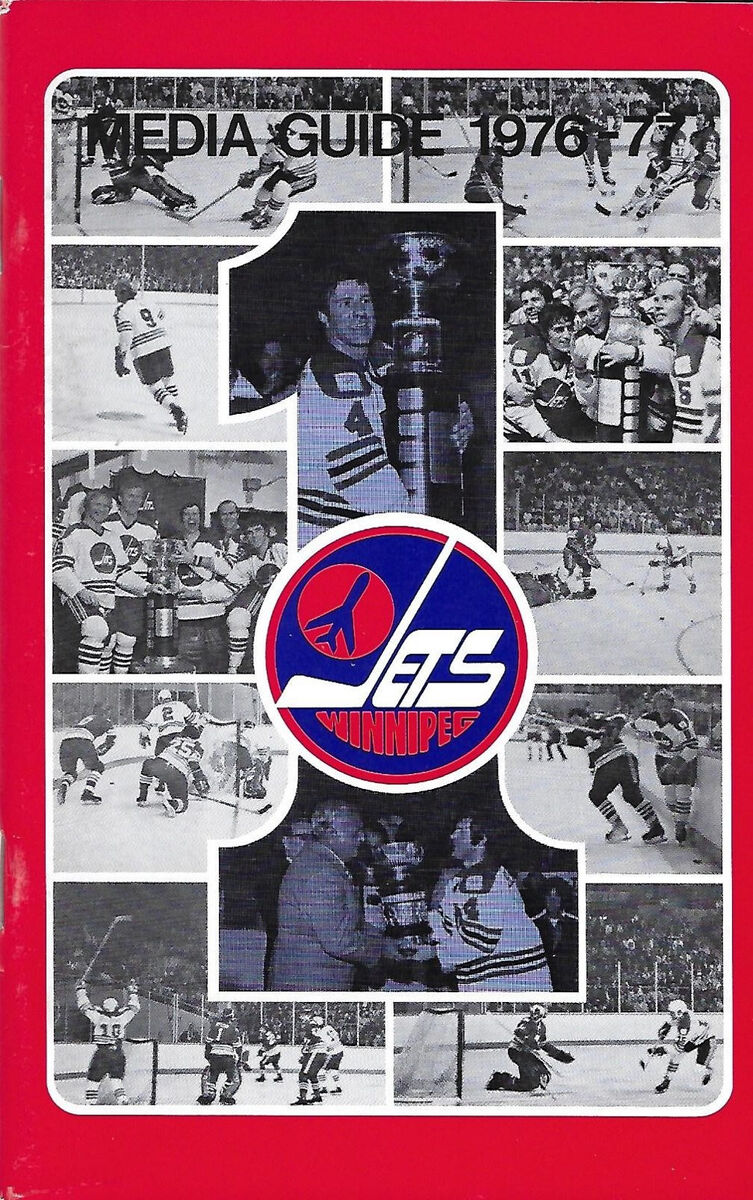
WHA AVCO Cup Championships: 1976, 1978 & 1979
Arena
Winnipeg Arena Capacity: 10,100 (1972-1979), 15,393 (1979-1996) Opened: October 18, 19553Opener Success Despite ‘Peg Loss, The Sunday Sun, Oct. 19, 1955 Closed: November 7, 20044 Winnipeg’s White House: The Old Winnipeg Arena, Heritage Winnipeg, Sep. 15, 2022 Demolished: March 26, 20065Winnipeg’s ‘Old Barn’ resists demolition, CBC News, Mar. 27, 2006
Marketing
Team Colors: 1972-1979: Navy, Red, White 1979-1996: Blue, Red, White
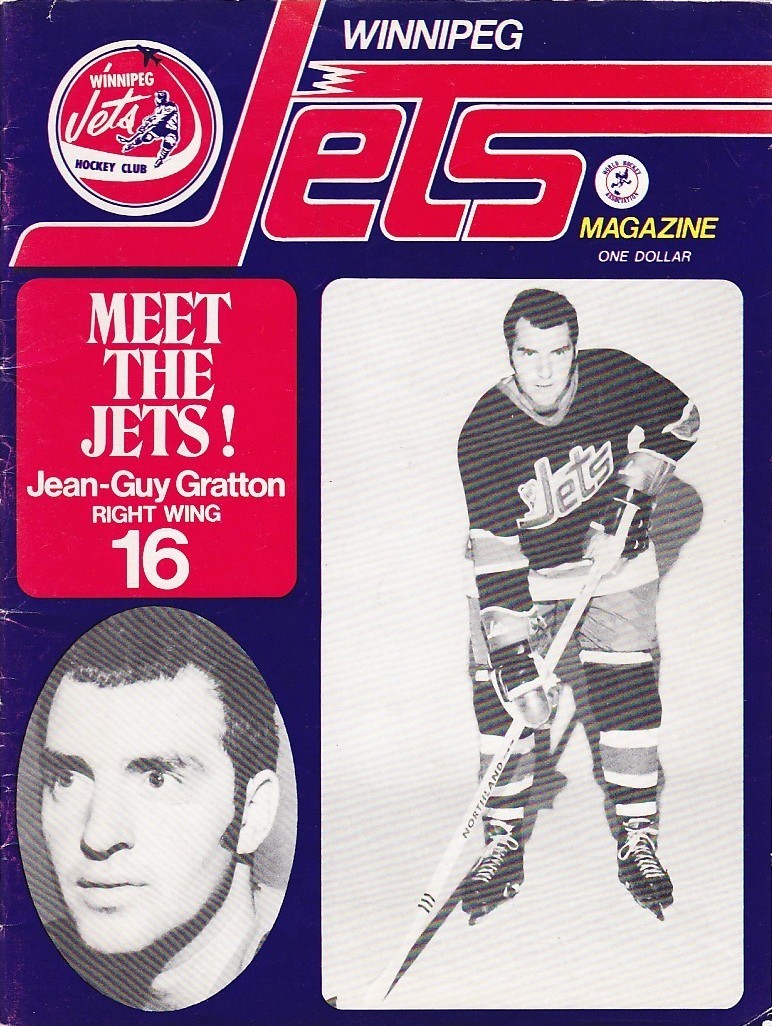
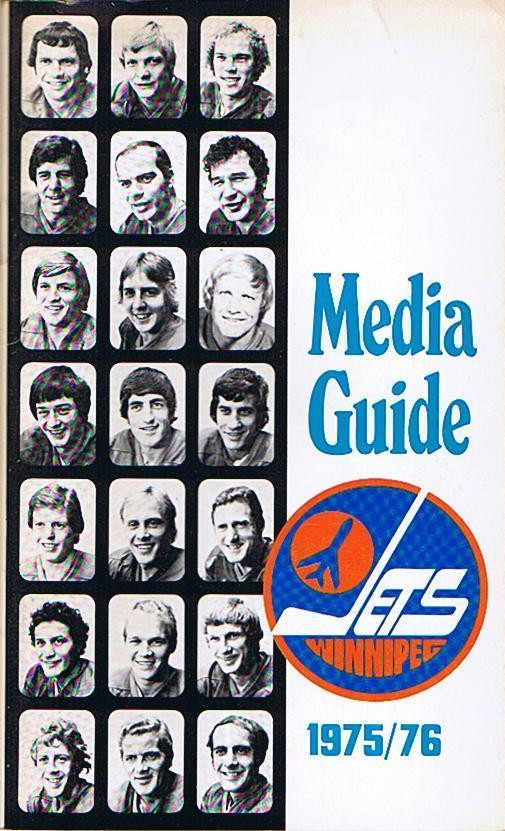
The original Winnipeg Jets pro hockey team was a charter member of the World Hockey Association (WHA), formed on November 1, 1971. The franchise was awarded to Winnipeg businessman Ben Hatskin, who once played center for the Winnipeg Blue Bombers of the Canadian Football League.6WHA prepares for fight, UPI via The Windsor Star, Nov. 2, 1971
At the time of the WHA’s founding, Hatskin was entering his fifth year as owner of a team in the Western Canada Junior Hockey League (WCJHL), a minor league circuit called the Winnipeg Jets.7Flin Flon receives entry in western junior league, Saskatoon Star-Phoenix, May 27, 1967 Hatskin christened his new WHA team the Jets. In turn, the WCJHL club became known, colloquially, as the Junior Jets. Hatskins would own both for the 1972-73 hockey season. In 1973, he sold the Junior Jets to that team’s general manager, who in turn became the Winnipeg Clubs,8Jr. Jets now Clubs, CP via The Vancouver Sun, Sep. 6, 1973 later the Monarchs, and played on until 1977, when they moved to Calgary.
Winnipeg Jets sign Bobby Hull
From the start, Hatskin wanted to be taken seriously and was determined to bring a first-class major league hockey operation to Winnipeg. A month after the team was formed, he was in hot pursuit of one of the game’s top stars, Bobby Hull.9Money talking for WHA? The Sun, Dec. 8, 1971
Hull had been a superstar for the Chicago Black Hawks of the established National Hockey League (NHL). Feeling he was highly underpaid, he joked with reporters that he would jump to the new league for $1 million, a sum considered absurd at the time. Hatskin and the WHA, however, took Hull very seriously. After seven months of back-and-forth negotiations, Hull inked a multi-year deal with the Jets worth $2.5 million.10Bobby Hull Signs Contracts Worth $2.5 Million, AP via The Evening News, Jun. 28, 1972
That came a month after the team’s first signing, Norm Beaudin, a star in the American Hockey League (AHL), who played twelve games with the NHL Minnesota North Stars. Beaudin would henceforth be known in team lore as the Original Jet.
World Hockey Association dominance
Propelled by Hull, Beaudin, and Ab McDonald, the Jets were one of the WHA’s most successful teams, on the ice and at the ticket window. They made the WHA playoffs in all but one of the league’s seven seasons, and even in that campaign, they finished with a winning record of 38-35-5. It was after that season, 1974-75, that Hatskin sold the team to consortium that converted it into a community-owned entity. That structure only lasted two years, before a group led by Barry Shenkarow bought the team with an eye toward getting into the NHL.11Jets owners gamble on NHL, CP via The Windsor Star, Feb. 27, 1978
The following year, they won the AVCO Cup, the league’s championship trophy, the first of four straight finals appearances. They lost in 1977 but won in 1978 and 1979, the league’s final season. Long before hosting that final cup and Shenkarow’s purchase of the team, though, the Jets fellow WHA competitors, were angling for a merger with the NHL.12World Hockey Association isn’t shutout yet, The Ottawa Citizen, Jun. 8, 1978
Winnipeg struggles in the NHL
After several fits and starts, the two league’s announced an agreement in March of 1979. The merge became official on June 22 of that year, though many have since described it as an absorption as only four of the six surviving WHA teams joined the NHL and on onerous terms. The Jets, however, were one of them.
The four WHA clubs were considered expansion teams and, as such, were forced to pay $6 million each to join the NHL.13NHL-WHA Merger Ends Hockey Wars, UPI via The Pittsburgh Press, Mar. 31, 1979 The existing NHL teams were allowed to reclaim any former players that had gone to the WHA, save for two skaters and two goaltenders.14Merger puck in WHA court, The Weekend Express, Mar. 23, 1979 The former WHA teams could restock via an expansion draft, but had to compensate the NHL team from which they took a player to the tune of $125,000 a head.15Penguins ready for NHL draft, Beaver County (PA) Times, Jun. 8, 1979In some cases, the WHA teams redrafted their lost players.16Edmonton Big Losers, AP via The Reading Eagle, Jun. 10, 1979 For the regular draft, all four newcomers were placed at the back of the line.
The Jets finished their first NHL season with a record of 20-49-11, good for fifth place in the six-team Smythe Division, but not short of qualifying for the playoffs. Still, it was the worst showing of the four former WHA clubs. The following year, Winnipeg finished with a dismal record of 9-57-14.
The Jets improve
The poor finishes, though, produced high draft picks for the team. That, combined with a move to the weak Norris Division, meant a second-place finish in 1982 with a record of 33-33-14. The Jets went on to make the playoffs in 10 of the next 14 seasons, but unfortunately, made it out of the first round only twice, and never got any further than that.
By the early 1990s, the realities of running a modern pro sports franchise began to encroach on the Jets’ business model. The team played in what was considered to be a minor league facility, even though it was expanded to NHL standards in 1979.17Expansion plans snagged, CP via The Leader-Post, Aug. 17, 1979 The cost of that renovation, however, was passed on to the Jets in the form of higher lease payments. The Jets made no money on parking or concessions, with all of that revenue going to the city.
As early as 1983, the Jets were looking to get a new arena built in Winnipeg, but local political leaders balked.18NHL Jets may have to move, SNS via The Sun, Oct. 21, 1983 The Jets’ majority owner Barry Shenkarow, banged on for over ten years trying to get a new arena built, stating repeatedly that the team might have to move, but to no avail.19Shenkarow makes case for new area, The Jewish Post & News, Oct. 27, 1993
Move to Phoenix
Finally, after years of losing tons of money, Shenkarow and his partners sold the team to Richard Burke (NOT Monica Gellar’s former boyfriend) of Minneapolis and Steve Gluckstern from New York on October 18, 1995. They planned to move the team to Minnesota.20Jets sold for $68M, AP via The Sun-Journal, Oct. 19, 1995 Minneapolis/St. Paul had been without an NHL team for two years at that point, after the departure of the Minnesota North Stars, who had moved to Dallas. An 11th-hour effort to sell the team to local investors in Winnipeg fell through.21Ex-Chiefs Keep Sharks Attacking, The Spokesman Review, May 21, 1995
The move to Minnesota stalled when it was determined that the cost to renovate the St. Paul Civic Center, the former home of the WHA’s Minnesota Fighting Saints, were too great. The new owners settled on Phoenix after bringing in Jerry Colangelo, owner of the NBA’s Phoenix Suns and MLB’s Arizona Diamondbacks, as a partner.22As Minnesota drops out, Jets Headed for Phoenix, AP via The Spokesman-Review, Dec. 4, 1995
The saga of the Winnipeg Jets has a happy ending, of course. After it became painfully apparent that the Jets weren’t bluffing, the city built a new arena in the hopes of landing an expansion team or coaxing an existing franchise to move to Winnipeg. They accomplished the latter when the Atlanta Thrashers packed their bags and left for Manitoba on March 29, 2011, bringing the NHL back to Winnipeg after a 15-year absence.
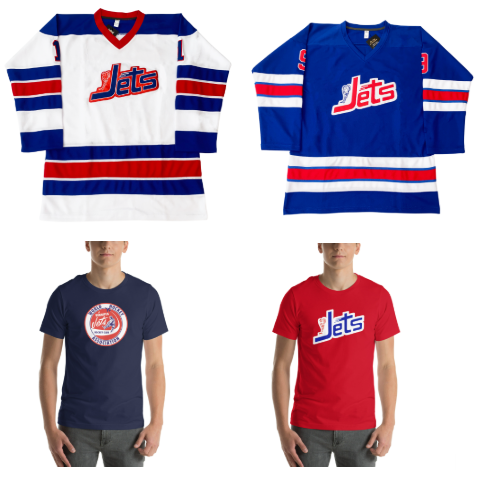
When it comes to replica jerseys, we turn to our friends at Royal Retros, who put extraordinary detail into their fully customizable hockey sweaters.
Free Customization Included
Each jersey individually handmade
Any name and number
Sewn tackle twill crest, numbers & letters
100% polyester
Heavyweight fabric made to game standards
Fight strap included
Honor the memory of the original and beloved Winnipeg Jets in one of these great jerseys or T-Shirts from Royal Retros.
##
Comments
2 Responses
I never heard that they originally wanted to move to Minnesota but it would have vost too much to renovate the arena. Kind of ironic that moving to Phoenix forced them to play in an arena too small for hockey and then to s new arena that was supposedly in an area of the Valley of the Sun where “the hockey fans” didn’t live and finally to a shoebox on the Arizona State campus. As a Phoenix native, it was sad to see them go, but I am happy that they finally got a major league owner and a major league situation in Salt Lake City.
Yes, we mention the Minnesota move in the post. Also, the Phoenix franchise is technically suspended. In other words, if Arizona gets a team back, they’ll assume the Coyotes history, stats, and probably name.

2 Responses
I never heard that they originally wanted to move to Minnesota but it would have vost too much to renovate the arena. Kind of ironic that moving to Phoenix forced them to play in an arena too small for hockey and then to s new arena that was supposedly in an area of the Valley of the Sun where “the hockey fans” didn’t live and finally to a shoebox on the Arizona State campus. As a Phoenix native, it was sad to see them go, but I am happy that they finally got a major league owner and a major league situation in Salt Lake City.
Yes, we mention the Minnesota move in the post. Also, the Phoenix franchise is technically suspended. In other words, if Arizona gets a team back, they’ll assume the Coyotes history, stats, and probably name.