
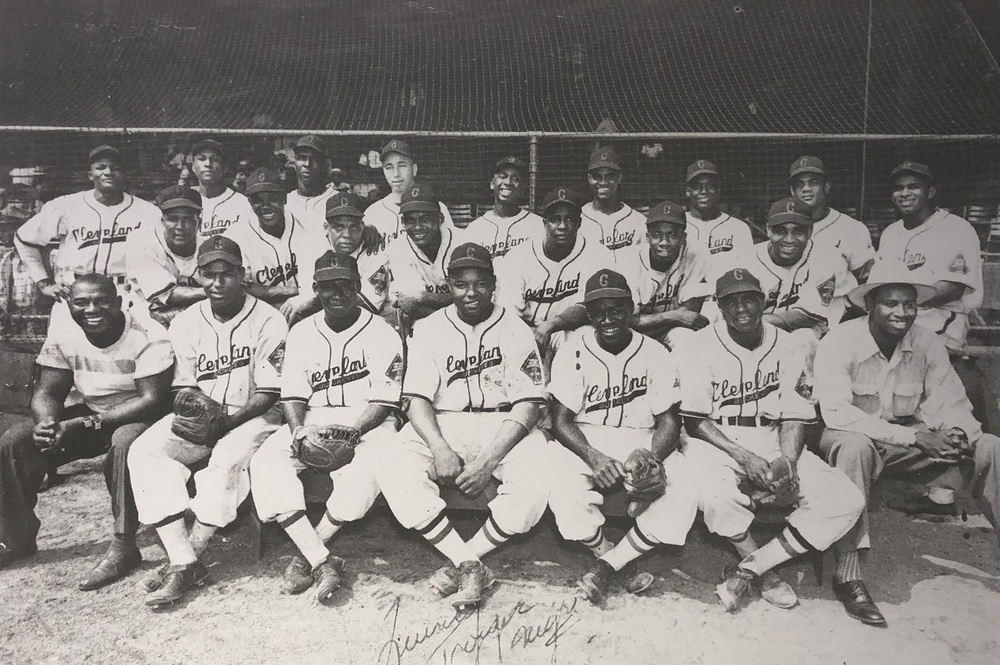
Negro National League II: 1938-1948
Negro American League: 1949-1951
Tombstone
Born: March 1938 (Washington Elite Giants relocate to Baltimore)
Moved: May 1951(Nashville Elite Giants)
First Game: May 21,1938 (Pittsburgh Crawfords 5 vs. Baltimore Elite Giants 2)
Last Game: August 1951
League Titles: 1939, 1949
Negro World Series Championships: 0
Stadium
Bugle Field: (1938–1949)
Terrapin Park/Oriole: (1939-1942)
Venable Stadium/Memorial Stadium: (1949-1950)
Westport Park: (1950)
Ownership
Owners:
Tom Wilson: (1938-1947)
Vernon Greene: (1947-1948)
Vernon Greene and Dick Powell (1948-1949)
Dick Powell and Henryene P. Green: (1949-1950)
William Bridgeforth (1950-1951)
Local Nashville Syndicate (1951)
Background
The Baltimore Elite Giants trace their roots back to February 19, 1907, and the formation of The Nashville Standard Giants. In 1920, local businessman Tom Wilson bought the team and changed its name to the White Sox. The club then joined the Negro Southern League (NSL), a minor baseball circuit founded at the same time the major Negro National League was formed. Before the start of the NSL’s second season in 1921, Wilson renamed the team again, this time choosing the nickname Elite Giants.1The 1939 Baltimore Elite Giants, Edited by Frederick C. Bush, Thomas Kern, and Bill Nowlin, Cronkite School at ASU, 1924
The NSL did not operate in 1924 or 1925, so the Elite Giants played on as a barnstorming team until 1926. That year, the NSL re-formed, and Nashville returned to that loop. In 1930, the team moved up and joined the Negro National League for one season, before switching back to the Negro Southern League for two seasons starting in 1931. In 1932, with the folding of the NNL, the NSL achieved major league status by default. In 1933, the Elite Giants moved to the Negro National League II, a new major league put together by Pittsburgh Crawfords’ owner Gus Greenlee.
On the move
In April 1935, Wilson announced the team was moving to Detroit in search of better fan support. However, a suitable home field could not be secured, so they played in Columbus, Ohio, as the Nashville-Columbus Elite Giants. The following season found them in the nation’s capital, where they became the Washington Elite Giants. After two seasons in DC, they were on the move again, moving down the road to Baltimore.2NNL Reinstates “Jumpers.,” The Afro-American, Mar. 12, 1938 There, they achieved their greatest success, both on the field and at the gate.
Dominating performance
Indeed, in their first season in Baltimore, they finished just behind the pennant-winning Homestead Grays. At the end of the following season, the Elites found themselves in third place. However, a four-team play-off resulted in them capturing the pennant and downing the Grays in the championship series, 3 games to 1, with one tie.
That championship was the source of some controversy. The winning team, in this case the Elites, was awarded the Rupert Cup. However, the Grays felt they were the legitimate 1939 champions, as they had won the most games. In other words, they did not recognize the postseason tournament as a way to determine the championship. The press and the rest of the baseball world, though, saw no discrepancy between the pennant and the awarding of the Ruppert Cup. The Elite Giants were considered the 1939 champions.
The team did Baltimore proud, finishing high in the standings throughout the 1940s. They finished first overall in 1941 and 1942, but since they didn’t win either half of either season, they did not qualify for the championship series and the Ruppert Cup.
Changing hands
In 1946, Wilson, in failing health, sold part of the team to the club’s business manager, Vernon Greene. It wasn’t the ideal time to take over a Negro Leagues franchise, as the following year, Jackie Robinson broke the color barrier, opening up the previously whites-only major leagues to black ballplayers.

In 1947, Wilson died, and Greene became the sole owner. A year later, Greene passed away, and control of the team went to his widow, who placed Dick Powell, the club’s business manager, in charge. The Elites stayed competitive, but it wasn’t the same, of course. In 1949, the Negro National League II went out of business, with four of its surviving teams, including the Elite Giants, joining the Negro American League. That circuit continued as a minor league until 1962.
Post-integration
For their final three campaigns, the Elites were a shell of the great teams that thrilled fans during the late 30s and on through the 40s, at least in terms of overall talent. Still, they won the Eastern Division title in 1949 and defeated the Western Division winners, the Chicago American Giants, in the championship series.
In 1950, William Bridgeforth bought the team for $11,000.3William “Soo” Bridgeforth, The Limestone County Sports Hall of Fame That included the team bus. The Elites finished 24-20-1, good for second place in the Eastern Division of the Negro American League. Just before the start of the 1951 season, Bridgeforth moved the team back to its original home, Nashville, Tennessee.41951 Full of Thrills and Surprises, The Baltimore African-American, Jan. 1, 1952 Oddly, the national press often listed them as the Baltimore Elite Giants, even though they had left the Old Line State.5Elites Return to New Nashville Home Lot, The Afro-American, Jul. 14, 1951
After a month in Tennessee, Bridgeforth sold the club to local interests. The Elite Giants played their final games in August of 1951, finishing with a record of 28-36.
Hall of Fame catcher Roy Campanella of the Brooklyn, and later Los Angeles, Dodgers, played for the Elites. Two other former Elite Giants, Joe Black and Jim Gilliam, went on to win the National League Rookie of the Year Award with the Dodgers in 1952 and 1953, respectively. Ray Dandridge, Leon Day, Biz Mackey, and Willie Wells are all former Elites who have been inducted into the Hall of Fame.