National Basketball Association (1977-2012)
Tombstone
Born: July 26, 1977 – The New York Nets receive permission to relocate to New Jersey
Moved: September 26, 2011 (Brooklyn Nets name announced)
Arenas
Arenas:
Rutgers Athletic Center (1977-1981)
Opened: October 6, 1977
Brendan Byrne Arena (1981-2010)
Opened: July 2, 1981
Closed: April 3, 2015
Prudential Center (2010-2012)
Opened: October 25, 2007
Marketing
Team Colors:
1978-1997 Blue, White, and Red
1997-2012 Navy, Red, Dark Silver, Silver, White
Ownership
Owners:
- 1977-1978: Roy Boe, et al.
- 1978-1983: Joseph Taub, Henry Taub, Alan Cohen, et al
- 1983-1998: Joseph Taub, Henry Taub, Alan Aufzein, Jerry Cohen, David Gerstein, Bernie Mann & Don Unger
- 1998-1999: Ray Chambers, Lewis Katz, Finn Wenworth, Stanley Gale, et al.
- 1999-2004: YankeeNet
- 2004-2010: Bruce Ratner, Jay-Z, et al.
- 2010-2011: Mikhail Prokhorov (remained owner after move to Brooklyn)
NBA Championships: None
Background
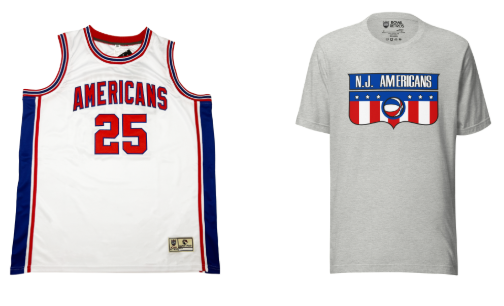
In a foreshadowing of things to come for this misbegotten franchise, the Americans finished the 1967-68 season with a record of 36-42, tied for last in the ABA’s Eastern Division with the
Kentucky Colonels. A single-game playoff with the Colonels would determine which team grabbed the fourth and final spot in the ABA playoffs. But the Teaneck Armory, the Americans’ home, was booked by the circus that night. The game was moved to the Long Island Arena in Commack, NY. On Saturday night, March 23, 1968, the two teams walked onto the court, decided it was unplayable, whereupon the game was forfeited to the Colonels.
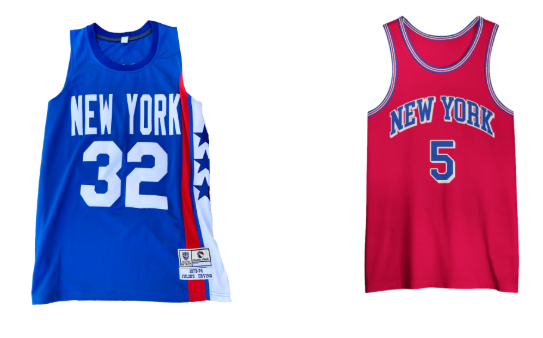
The arena was good enough, though, to be the franchise’s temporary home the following season, as owner Arthur Brown announced on July 15, 1968, that the club would henceforth be known as the New York Nets. The plan was to play in Commack for a season and a half, then move into the new
Nassau Veterans’ Memorial Coliseum at some point during the 1969-70 season.
The Coliseum wouldn’t open until February 1972, forcing the nomadic Nets to find new digs in 1969. They landed at Island Garden in Hempstead, NY. Attendance improved slightly, as did the team’s record. They made it to the playoffs but lost in the Eastern Division semi-finals.
Barry good deal and a proper arena
On the court the team’s fortunes improved the following season with arrival of superstar Rick Barry, formerly of the NBA’s San Francisco Warriors. The future hall of famer had joined the ABA’s Oakland Oaks when that league started in 1967, though an injunction forced him to sit out the league’s first season. When the Oaks relocated to Washington, D.C., Barry didn’t want to go, but a court ruling compelled him to do so.
After one season with the
Washington Caps, Barry tried buying out his contract so he could return to San Francisco. Instead, he agreed to a deal that sent him to the New York Nets, which would allow him to be close to his hometown of Elizabeth, New Jersey. Barry was in a Nets uniform for the start of the 1970-71 season.
For the 1971-72 season, the team returned to the Island Garden. But on February 11, 1972, the Nets welcomed the
Pittsburgh Condors to the Nassau Coliseum and defeated the Steel City cagers 129-121 before a crowd of 7,892. They finished that season with a record of 44-40, their first winning mark, and made it to the ABA finals, where they lost to the Indiana Pacers. Things were darkest before the dawn as the team tumbled to 30-54 the next season, good enough to make the playoffs, though. Unfortunately, they lost in the first round to the Carolina Cougars.
The Nets’ big break came on July 31, 1973, when they acquired Julius “Dr. J” Erving from the rival
Virginia Squires. Erving was the ABA’s leading scorer, and his presence propelled the Nets to a 55-29 record and an ABA championship in 1974.
Another strong finish in 1975 ended in disappointment, though, when the Nets succumbed to the
Spirits of St. Louis four games to one in the division semifinals. Still, the team was in pretty good shape financially and on the court.
Moving on up
On September 24, 1975, the Nets, along with the Denver Nuggets, submitted applications to join the NBA. Larry O’Brien, the NBA’s commissioner at the time, told the press both applications would be given serious consideration. A few weeks later, the rest of the ABA petitioned to join the NBA. These overtures were ultimately rejected by the NBA as several legal issues had to be settled first, including one brought by the legendary Oscar Robertson, who challenged the reserve clause. This was an issue that the other major established sports leagues were dealing with as well. They all lost in the courts, paving the way for the system of free agency that we know today.
A month after the Nets topped the Nuggets for the final ABA title game, the NBA took in the ABA’s New York Nets, San Antonio Spurs, Denver Nuggets, and Indiana Pacers. As part of the agreement, the Nets had to pay the NBA Knicks $4.8 million for the rights to share the New York market, on top of the $3.8 million they had to cough up just to join the NBA. To cover those expenses, owner Roy Boe sold the contract of Julius Erving to the Philadelphia 76ers.
On the move again
The Nets won just 22 games in their first NBA campaign, and Boe, who also owned the NHL Islanders, decided during the offseason to move the Nets back to New Jersey after talks on renewing the team’s lease at the Nassau Coliseum broke down. That triggered another squabble with the Knicks, who claimed the Nets playing just across the Hudson River would cause harm to their interests. Odd, since the Nets were merely moving from one side of the market to the other.
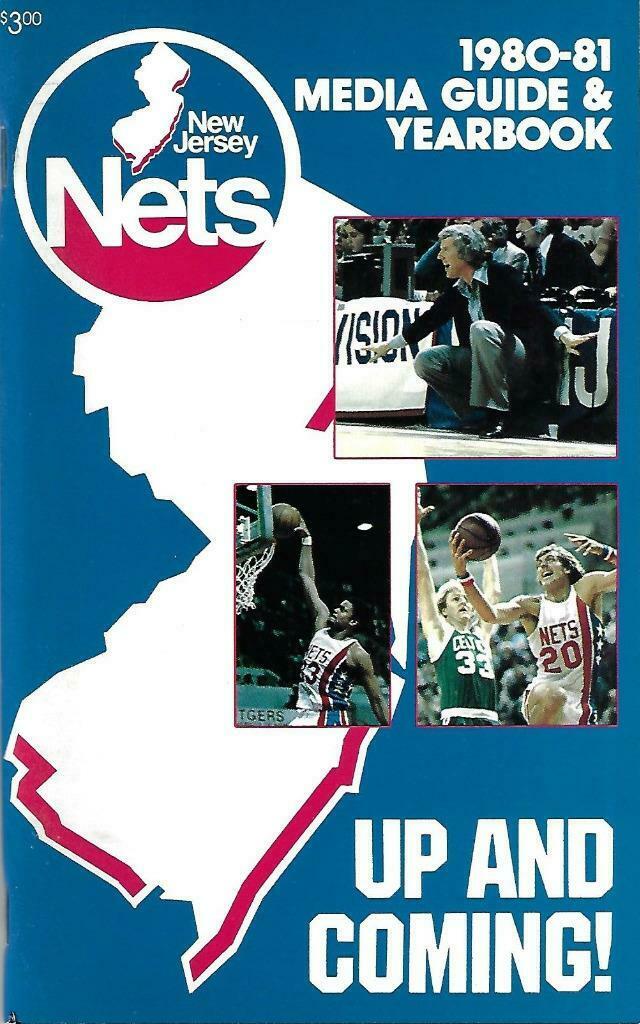
After a heated debate and threats of legal action from both sides, the Nets were ultimately granted permission to move (back) to New Jersey. The biggest motivating factor in heading back to the Garden State was a new arena planned for the Meadowlands Sports Complex in East Rutherford, NJ. The site already boasted the brand new Giants Stadium, and the New Jersey Sports and Exposition Authority was keen to get an arena sorted, ideally with tenants in the NBA and NHL. Unfortunately, the new arena wouldn’t be ready for immediate occupancy, forcing the Nets to use the Rutgers Athletic Center for four seasons.
1978-1998: Secaucus Seven Era
Crushing debt from the Islanders’ and Nets’ expansion fees, plus territorial tribute payments to pay to the NHL’s Rangers and NBA’s Knicks, finally overwhelmed Boe during the summer of 1978. He was forced to sell the Nets to a consortium of 13 local investors that summer. Over the years that followed, attrition reduced that group to seven individuals who became known as the Secaucus Seven, named for the suburban industrial park where the partners maintained an office, as well as a critically acclaimed 1980 film of the same name.
Another new arena and some bizarre moves
The brand new
Brendan Byrne Arena opened in 1981 with a series of concerts by New Jersey’s favorite son, Bruce Springsteen. The Nets played their first game there on October 14 of that year, an exhibition game against the Knicks. The Nets lost 101-99, but the new building was just the tonic the team needed. After finishing 24-58 the previous season, while ranking 20th of 23 teams in attendance, the Nets finished 44-38 in their first season in the Meadowlands, and were 4th in attendance. Those trends continued through the rest of the decade.
However, for much of the 1980’s and 1990’s, the Secaucus Seven frustrated a succession of Nets executives and coaches, media members, and NBA officials with their meddling in basketball operations, infighting, and questionable decision-making.
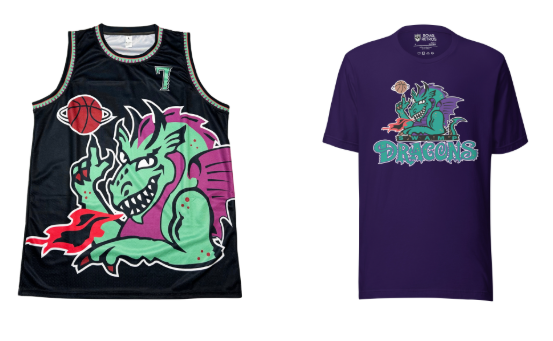
The most bizarre move came during the 1994-95 season. After a few up and down seasons, the team’s president, Joe Spoelstra, decided to rebrand as the New Jersey Fire Dragons. He later changed it to Swamp Dragons and sought league approval. When it came to a vote, every team in the league agreed to the name change, except one: The New Jersey Nets. This, after spending over $500,000 on a new logo and marketing materials.
In 1998, the Secaucus Seven sold the team to a group made up of area real estate developers. They, in turn, formed a partnership with New York Yankees owner George Steinbrenner, bringing both teams under the banner of a new organization called YankeeNet. The consortium later acquired the New Jersey Devils.
On the court, the team bottomed out, finishing with a 23-56 record in 2000-01. They bounced back the following season, finishing 52-30 and making it all the way to the NBA Finals, where they lost to the Los Angeles Lakers.
Back to New York
The team continued to perform strongly on the court, but attendance lagged. On January 21, 2004, the team was sold to Brooklyn developer Bruce Ratner, who announced his intention to move the team to that borough. Oddly, Ratner sold the team in 2010 before the move could be realized. He sold the team to Russia’s third-richest person, Mikhail Prokhorov, who got the deal finished to complete what would become the team’s new arena in Brooklyn.
Rapper Jay-Z, a minority partner in the club, announced the team’s new name on September 26, 2011. The rebranded Brooklyn Nets played their first regular-season game on November 3, 2012, which was also their home opener. They beat the Toronto Raptors 107-100 before 17,732 fans.
Links
National Basketball Association Media Guides
National Basketball Association Programs
##